Religious Symbolism in Neon Genesis Evangelion Explained
Neon Genesis Evangelion is often celebrated as one of the most influential and intellectually challenging works in anime history. Beyond its striking visuals and psychological depth, the series stands out for its extensive use of religious symbolism. Through complex narratives and layered imagery, Evangelion explores faith, identity, and existential anxiety in ways that continue to fascinate audiences worldwide.
At its core, the anime uses religion not as a doctrine, but as a symbolic language. This choice allows the story to address universal questions about human suffering, purpose, and connection. As a result, Evangelion transcends traditional genre boundaries and becomes a deeply philosophical experience.
Judeo-Christian Imagery and the Angels
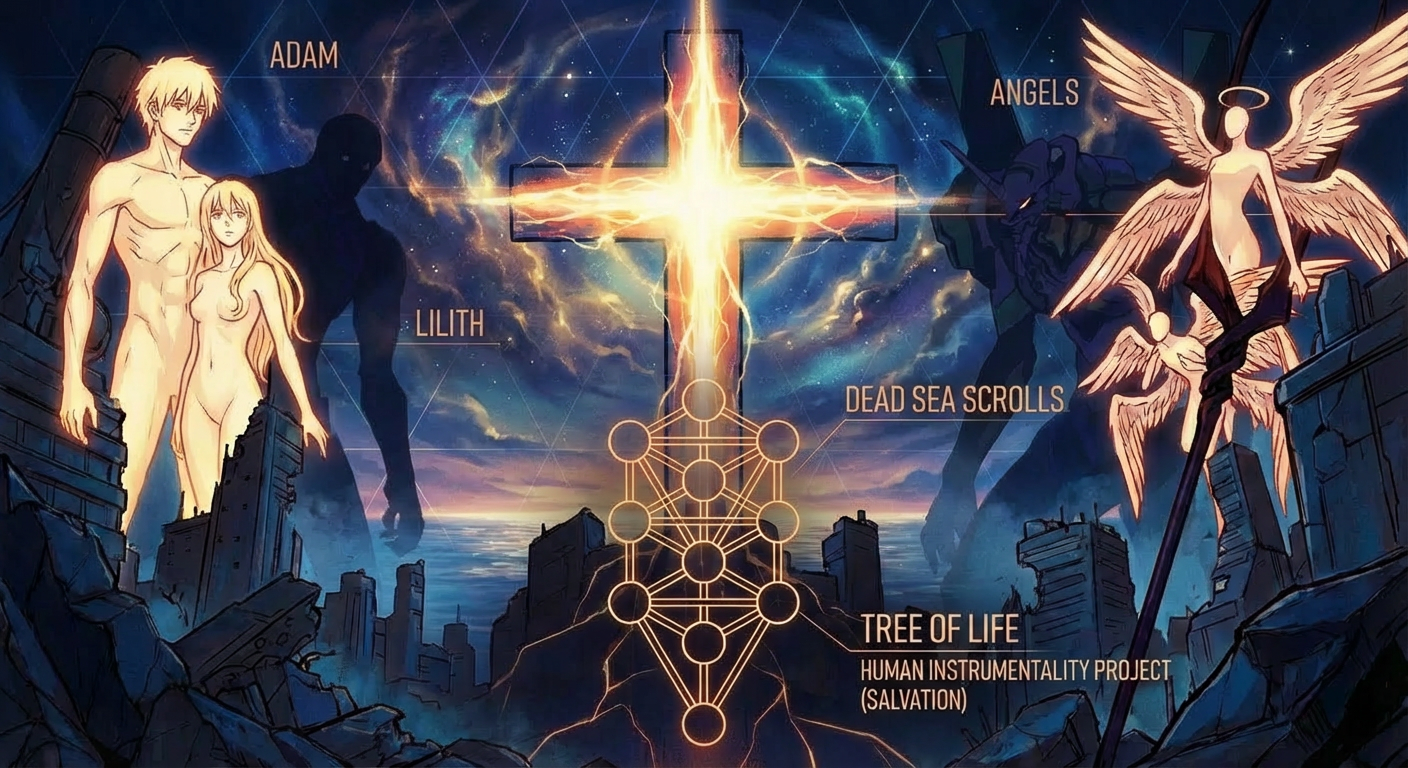
One of the most recognizable elements of Neon Genesis Evangelion is its heavy use of Judeo-Christian symbolism. The Angels, who serve as the primary antagonists, are named after figures from biblical tradition. However, their appearances are far from angelic. Instead, they take monstrous and abstract forms that challenge traditional notions of divinity.
In this context, the Angels are not simply enemies to be defeated. Rather, they represent existential threats and ideological conflicts. The series deliberately blurs the line between good and evil, suggesting that morality is rarely absolute. Moreover, this ambiguity forces viewers to question whether the Angels are truly villains or misunderstood entities driven by their own purpose.
Shinji Ikari and the Search for Meaning
Shinji Ikari, the protagonist of the series, embodies many of Evangelion’s central themes. As a reluctant pilot of the Evangelion units, Shinji struggles with loneliness, fear, and a deep desire for acceptance. His internal conflict mirrors classic religious narratives that focus on humanity’s fragile relationship with higher powers.
However, Shinji’s greatest struggle is not against the Angels, but against himself. His strained relationship with his father, Gendo Ikari, reflects themes of abandonment and unmet expectations. For this reason, Shinji’s journey becomes a metaphor for the human search for meaning in a world that often feels indifferent and hostile.
The Human Instrumentality Project and Existential Philosophy
Another key element of the series is the Human Instrumentality Project. This plan aims to dissolve individual consciousness and merge all humans into a single collective entity. On the surface, it promises peace and the end of suffering. However, this vision comes at a significant cost.
In contrast to individual existence, Instrumentality raises profound ethical questions. Is the loss of identity a fair price for harmony? The concept closely resembles ideas found in Eastern philosophies, such as Buddhist notions of ego dissolution. Nevertheless, Evangelion does not present a clear answer. Instead, it invites viewers to reflect on their own beliefs about individuality and connection.
Eastern Philosophy and Inner Conflict
While Evangelion draws heavily from Western religious imagery, it also incorporates elements of Eastern philosophy. Themes of introspection, self-awareness, and inner struggle are central to the characters’ development. Each character faces personal “inner demons” that must be confronted rather than avoided.
As a result, suffering is portrayed not merely as pain, but as a catalyst for growth. This perspective aligns closely with Zen Buddhist ideas of self-realization. Ultimately, the series suggests that understanding oneself is essential, even if the process is uncomfortable or painful.
Religion, Science, and Symbolism
Throughout the series, religious symbols such as crosses and apocalyptic imagery frequently appear alongside advanced technology and scientific concepts. This visual contrast reinforces one of Evangelion’s key messages. Faith and reason are not necessarily opposites.
Instead, the anime proposes that meaning can emerge from the intersection of science, spirituality, and human emotion. In doing so, Evangelion challenges viewers to rethink rigid boundaries between belief systems.
Conclusion
In conclusion, Neon Genesis Evangelion uses religious symbolism as a powerful narrative tool rather than a literal belief system. Through its complex characters, philosophical themes, and symbolic imagery, the series explores what it truly means to be human. By confronting issues of faith, identity, and connection, Evangelion remains a timeless and deeply relevant work.
For these reasons, the anime continues to inspire analysis and discussion decades after its release. Its message is clear: understanding ourselves is the first step toward understanding the world around us.
FAQ – Religion in Neon Genesis Evangelion
Why does Neon Genesis Evangelion use so much religious symbolism?
Neon Genesis Evangelion uses religious symbolism primarily for thematic and aesthetic purposes rather than to promote a specific belief system. The creator incorporated Judeo-Christian imagery to add depth, mystery, and a sense of universal meaning, allowing the story to explore existential and philosophical questions.
Are the Angels in Neon Genesis Evangelion based on real biblical angels?
The Angels in Neon Genesis Evangelion are inspired by names and concepts from biblical tradition, but they are not accurate representations of religious angels. Instead, they are reimagined as abstract and often monstrous beings that symbolize existential threats and challenge traditional ideas of good and evil.
What is the meaning of the Human Instrumentality Project?
The Human Instrumentality Project represents the idea of merging all human consciousness into one entity to eliminate pain, loneliness, and conflict. In Neon Genesis Evangelion, it serves as a philosophical concept that questions whether true happiness can exist without individuality and personal identity.
Does Neon Genesis Evangelion have a religious message?
Rather than delivering a clear religious message, Neon Genesis Evangelion uses religious symbolism as a narrative tool to explore themes like identity, suffering, and human connection. The series encourages viewers to interpret its meaning personally, blending elements of religion, philosophy, and psychology.